The words that welcome prospective students and the words that earn a skeptical buyer's trust have to do the same work: give users confidence, reduce friction, and make institutions feel approachable and human. I make sure they do.
Content strategy, brand voice, UX writing, information architecture — I've spent my career going deep into complex institutions and helping them bring clarity and structure to how they communicate.
My foundation in plain language and human-centered design from Carnegie Mellon is where it all started. I still get giddy landing on just the right word.
Available for full-time roles and select consulting engagements.
LinkedIn →
Technical Content Strategy
USDA Farm Service Agency Redesign
content audit, user research, content design, content modeling, Drupal
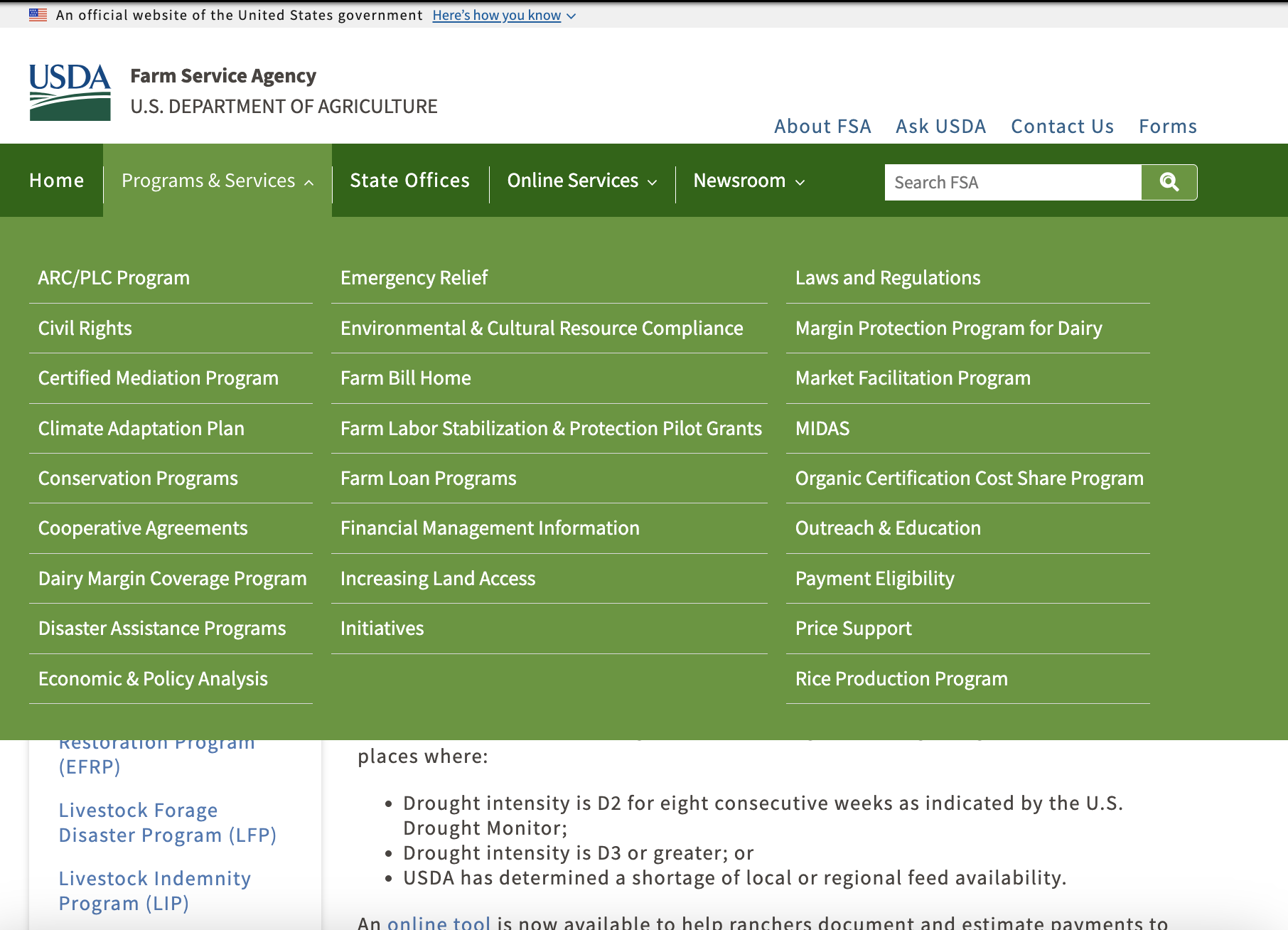
It was difficult for farmers and ranchers to use the USDA's Farm Service Agency site to find financial safety net programs. They faced an alphabetical mega-menu of 27+ items with no organizing logic. Screen recordings showed rage clicks, and survey responses flagged missing dates and deadlines as top frustrations.
I was brought in as the senior content strategist on a team tasked with a federal mandate to implement human-centered design to this and two other USDA websites.
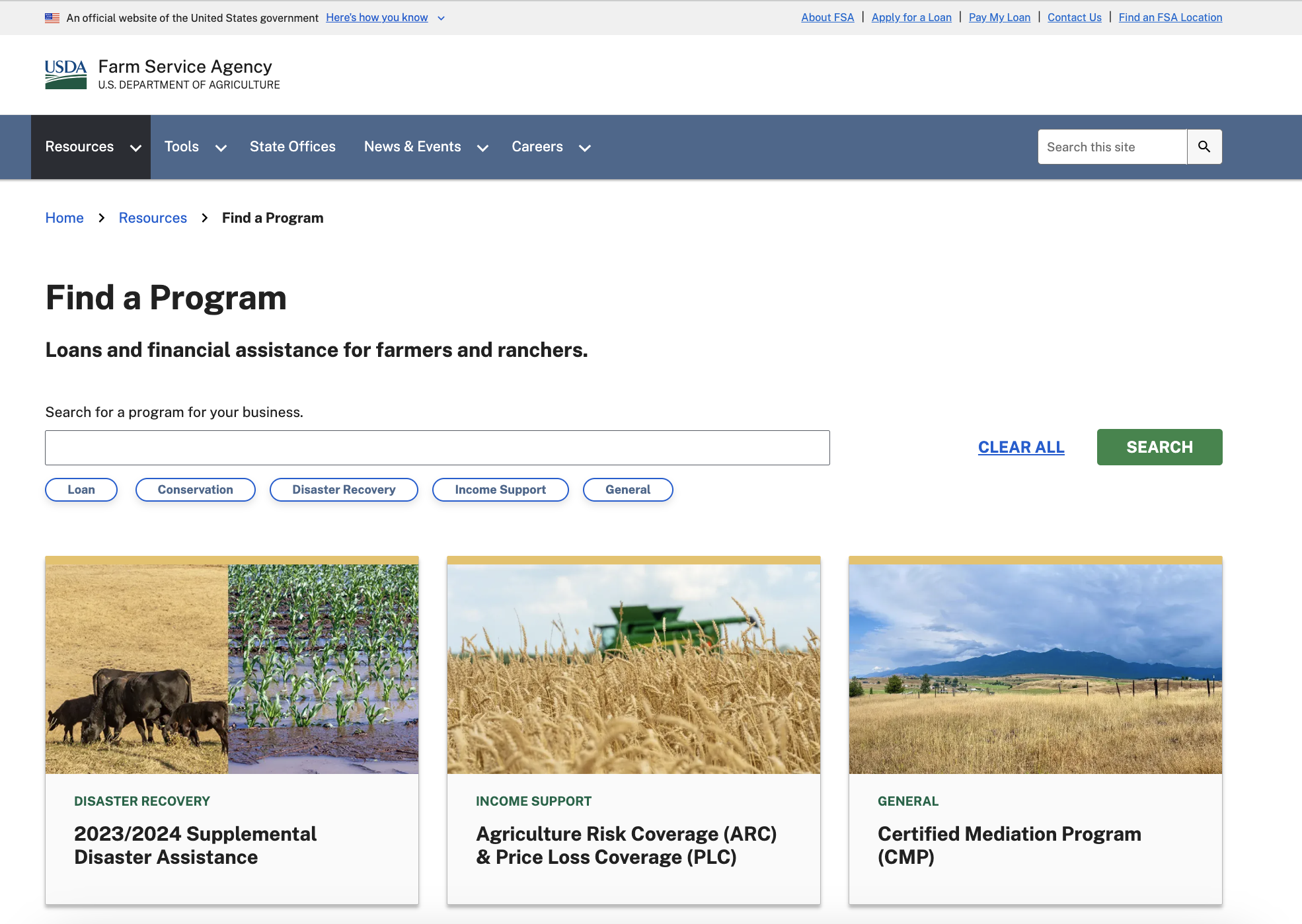
I restructured the site's information architecture around how farmers think about their needs rather than how the agency organized its programs. The centerpiece was a new "Find a Program" menu item and landing page — searchable and filterable by category — replacing the flat list with a structured content model that brought consistency across 50+ program pages.
Before
After
Arcadia University Redesign
content audit, usability testing, plain language, information architecture
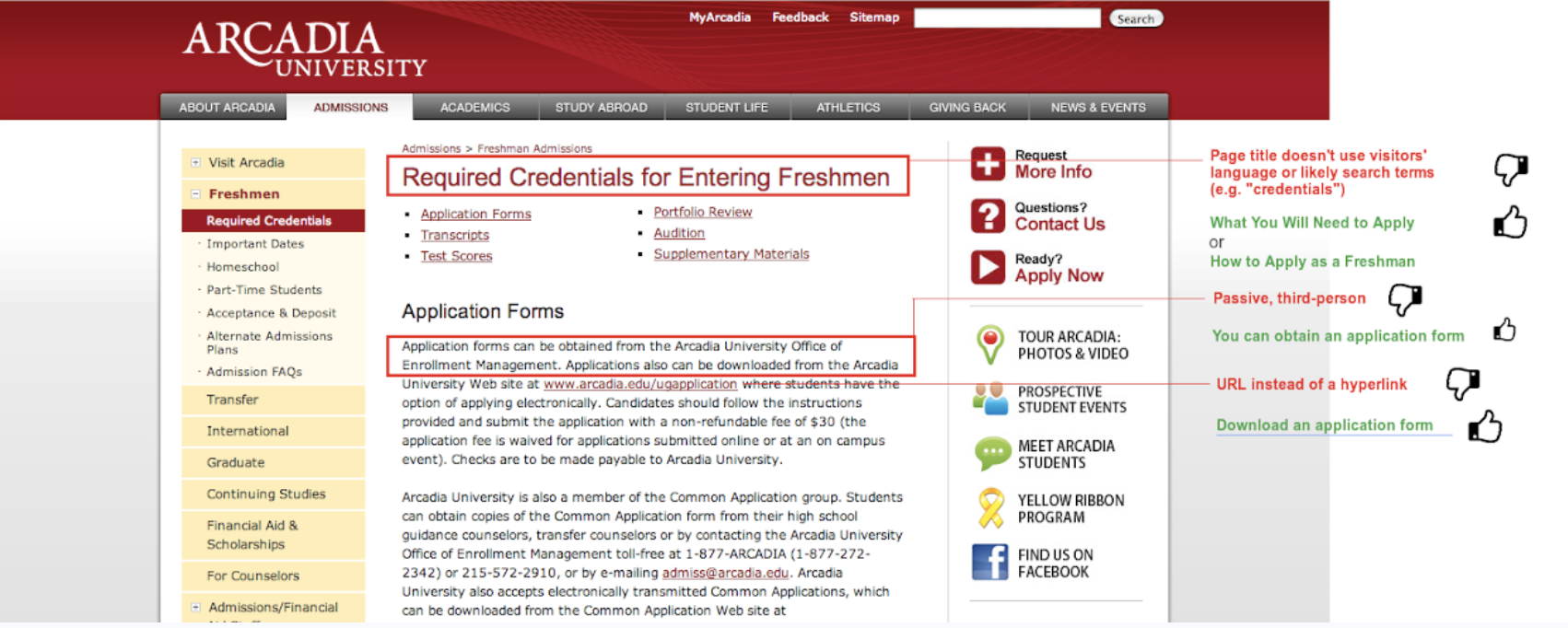
University websites in the early days of the web were built for administrators, not students. When I joined a redesign project for Arcadia University, the site read like a policy document — dense paragraphs, passive voice, pages written for the institution rather than students and their families.
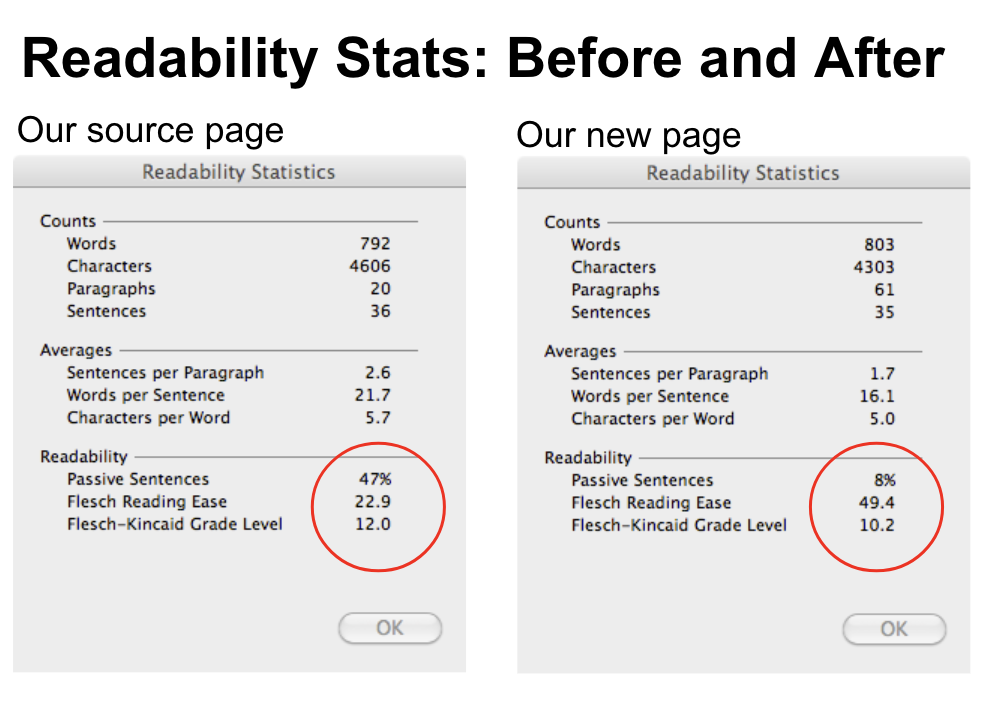
I developed a content strategy methodology for the redesign that started with the audience’s questions, not the institution's org chart. Working page by page, I identified specific issues — buried information, weak headings, walls of text — and rewrote content to be scannable, direct, and action-oriented. I also created a plain language writing guide for non-professional contributors to maintain standards after launch and guided usability testing with actual high school students.
Detailed Content / UX Audit
Plain Language Rewriting
In-App UX/UI Writing
Element451
UX writing, microcopy, feature onboarding, plain language
Element451 is an AI-driven CRM platform for higher education. I was there from the beginning — first as a content and UX writer embedded with the product team, then growing into marketing leadership as the platform scaled. These samples are from the early days, when we were building the core product.
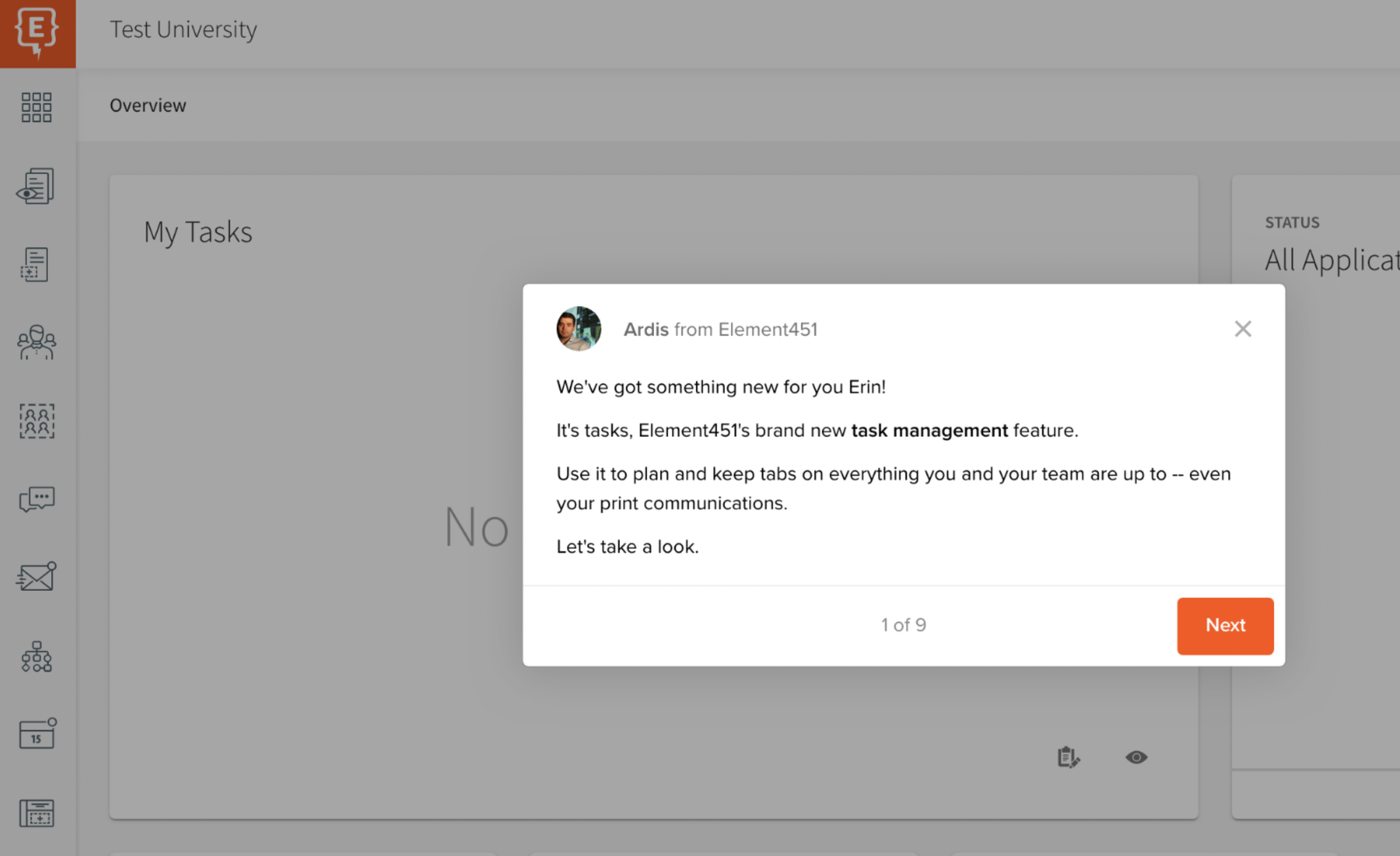
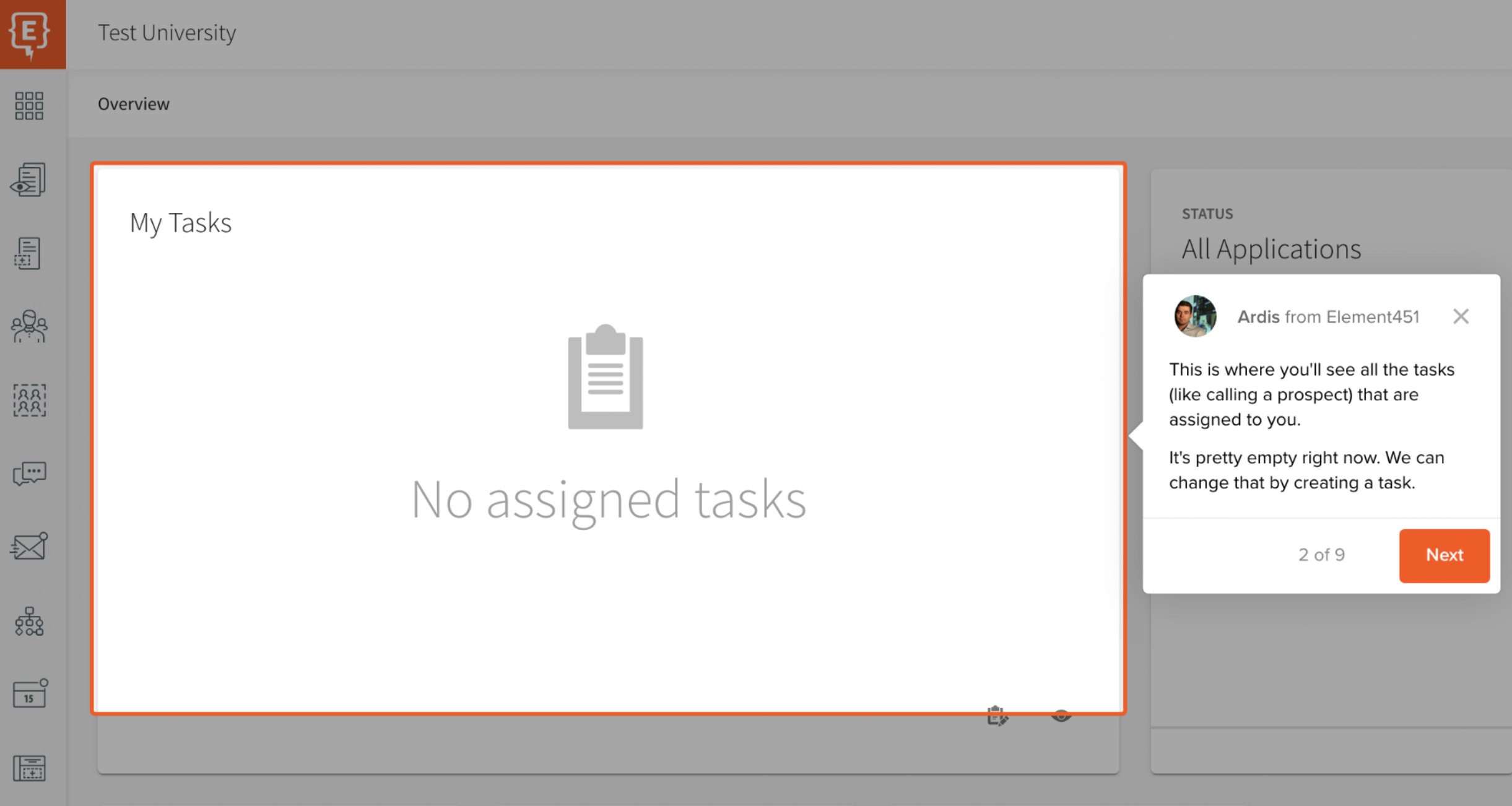
New Feature Tour
I wrote this guided walkthrough to introduce task management to admissions teams. Each step had to move users forward without overwhelming them — clear enough for a first-time user, brief enough not to interrupt their workflow. That said, I'd probably shorten the number of steps if I had a chance to rewrite the tour today.
Microcopy
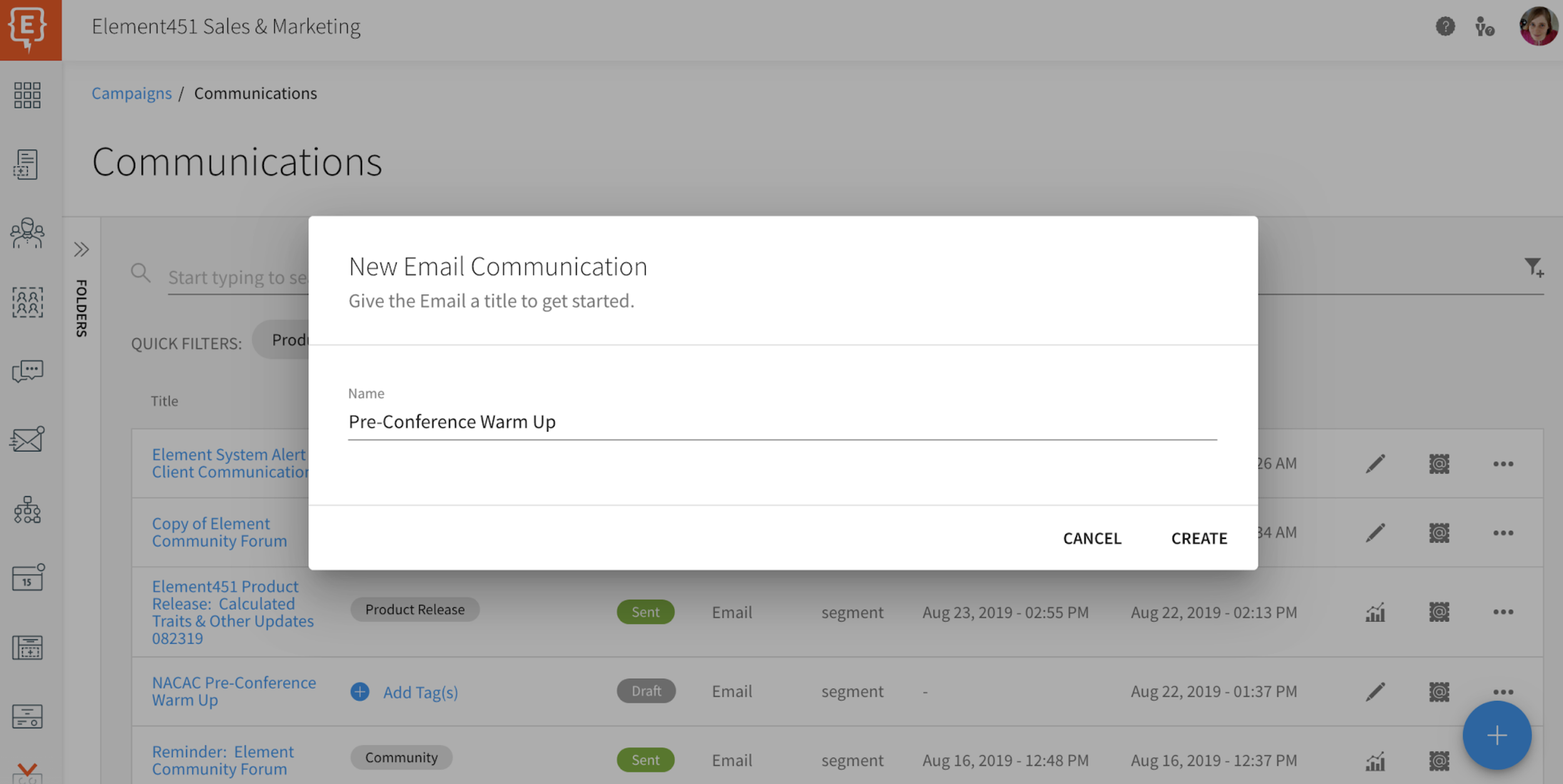
Across the platform, I used plain language to write clear labels and descriptions so users knew exactly what they were choosing before they clicked — no jargon, no ambiguity.

Plain Language + Content Governance
editorial guidance, brand voice, generative AI governance, knowledge design
I've spent my career not just writing clearly myself, but building the standards and tools that help others do the same — first for human contributors, now for AI. A style guide for a university web team and a knowledge base for a custom GPT are solving the same problem: how do you make sure content stays clear and consistent when you're not the one writing every word?
Guilford College Web Writing Style Guide
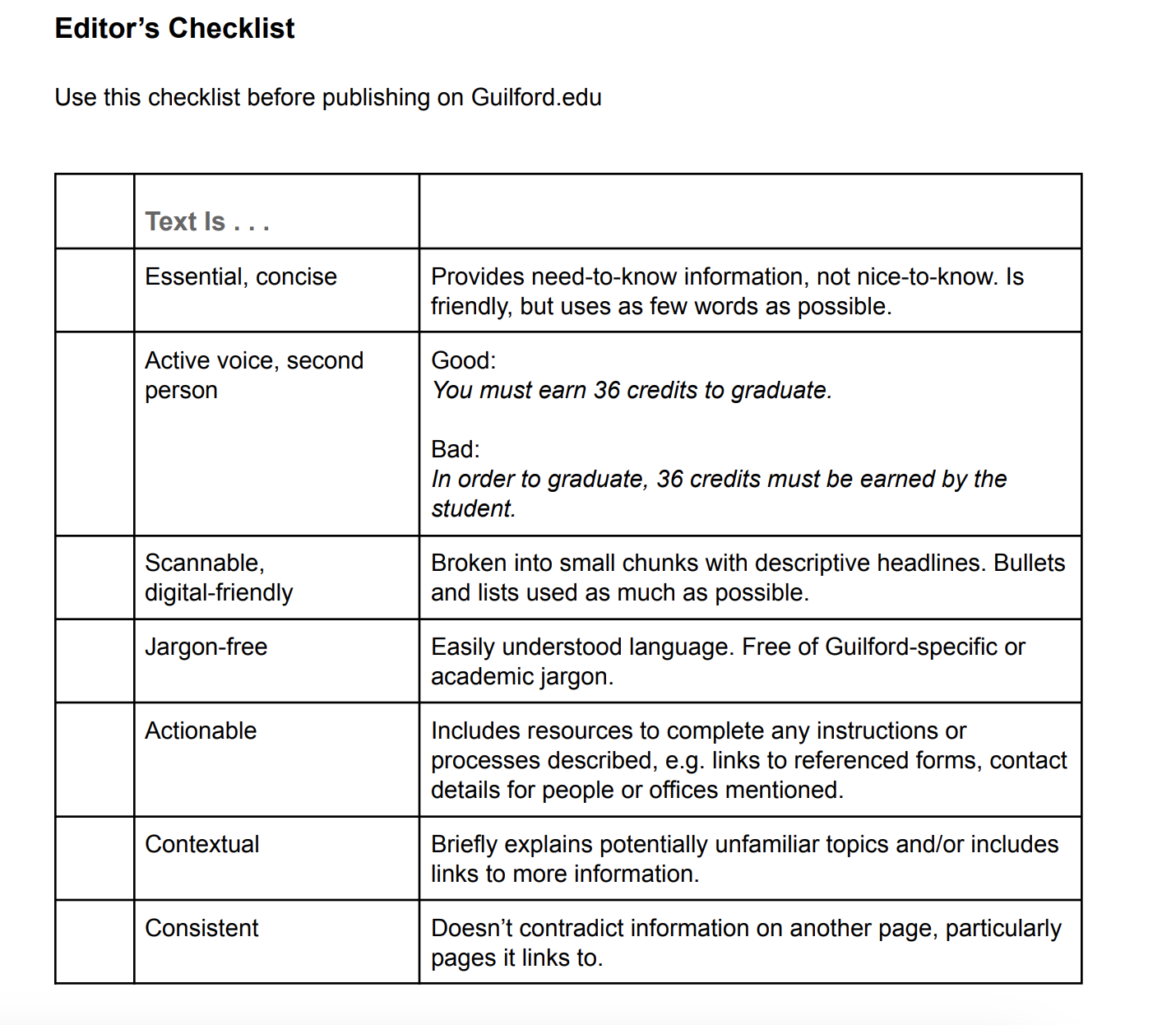
I wrote this guide for non-professional web contributors during a university site redesign. It covers voice, tone, plain language principles, SEO basics, and an editor's checklist — everything a subject matter expert needs to publish clearly without being a writer by training.
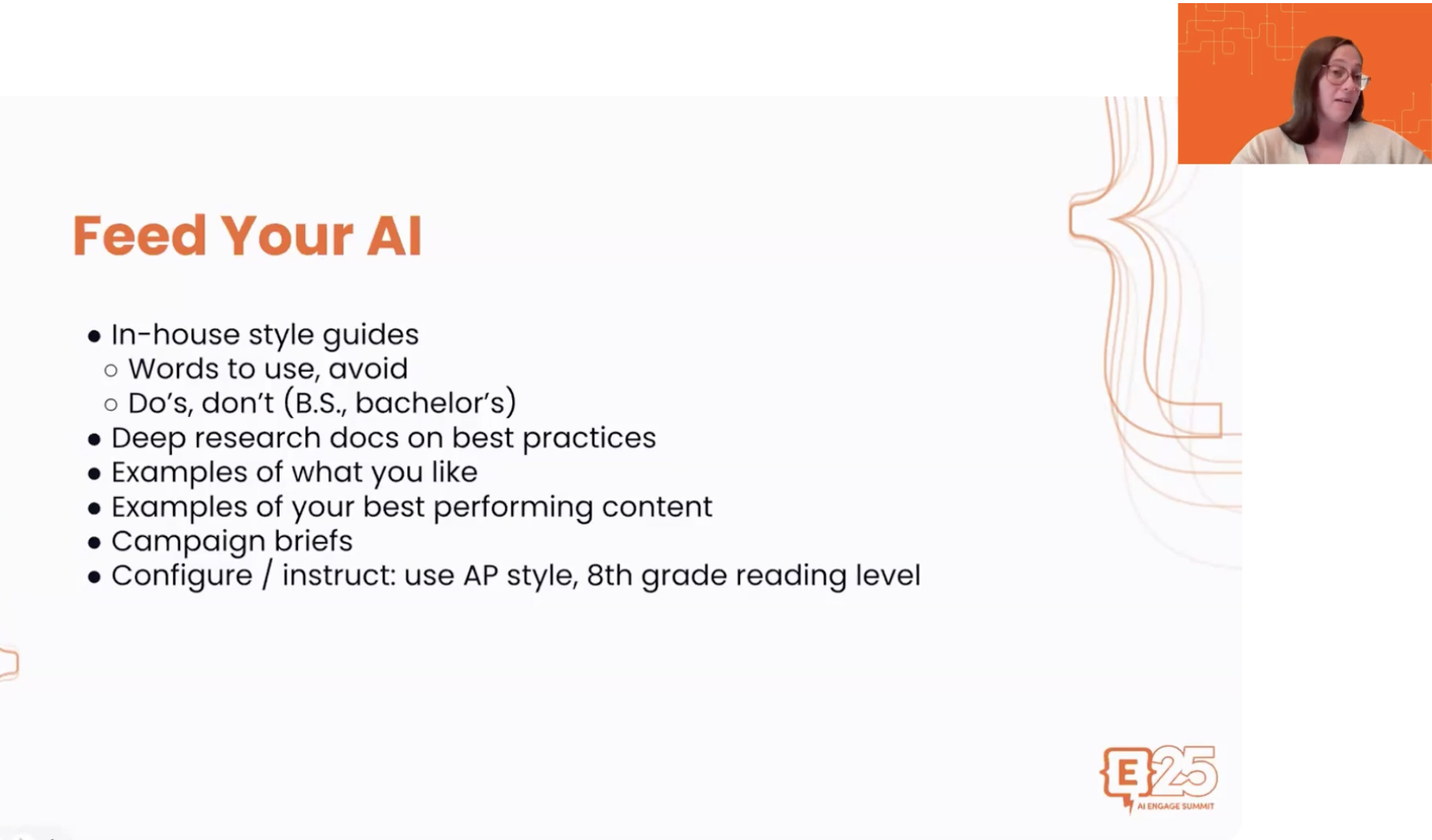
The same thinking behind a contributor style guide applies to an AI knowledge base — you're still defining voice, constraints, and context. Just for a different kind of writer. This session, the highest-viewed from Element451's two-day event, walks through how to build the knowledge base and instructions that teach a GPT to write in your organization's voice.
How to Get Your GPT to Write Like You
Product Content
product messaging, plain language, SaaS, narrative writing, Webflow
Content strategy doesn't stop at the navigation. These samples show how I've brought plain language and structural thinking to product marketing — writing for technical buyers, building conference sites, and framing new product categories for a higher ed audience.
Product Landing Pages
As Element451 rolled out new AI functionality, it wasn't enough to tack on "AI" everywhere. We needed to explain to buyers why an AI-driven solution beats a traditional one. I wrote each page as a plain language argument for making the switch — helping admissions leaders understand the value before they considered a demo.
AI-First Student Success
Element451 was making a case for a fundamentally different approach to student advising — AI-first rather than reactive. I wrote this post to introduce that category shift to a higher ed audience. I led with a real student story because numbers alone don't move people.
AI Professional Development Workshop
I structured and wrote this landing page for a new offering at Element451's annual user conference: an AI professional development workshop. I built it directly in Webflow, which hosts the full site.
Long Form + Thought Leadership
narrative writing, content strategy, research, higher ed, AI
Two pieces that show how I think about content strategy beyond the page level — one written at the beginning of my career, one more recently. The thinking in both still holds up.
The Content Iceberg
I wrote this while working on university website redesigns, when I kept seeing the same problem: teams would do all the IA and design work, then realize too late they hadn't planned for the actual content. This piece made the case for treating content as a first-class citizen in any redesign project. I stand by that argument.
Read the post →
The Definitive Guide to AI in Higher Education
Element451's most-downloaded lead magnet during my time there. I researched and wrote this guide to help higher ed leaders understand what AI actually means for their institutions — practical, jargon-free, and built for an audience that was skeptical of hype.